

RP Fiber Power — Simulation and Design Software for Fiber Optics, Amplifiers and Fiber Lasers
| Overview | Interface | Physics | Speed |
| Demos | Power Forms | Fiber Data | Versions |
The Ultimate Tool for Developing Fiber Lasers and Amplifiers
Simulate fiber lasers and amplifiers in no time,
understand how they really work,
boost the quality and efficiency of your development!
What can you do with RP Fiber Power?
RP Fiber Power is a powerful software for simulation, design and optimization of fiber devices — in particular, fiber amplifiers and lasers as well as other types of waveguide lasers (and even many bulk lasers), but also fiber couplers, multi-core fibers, helical core fibers, tapered fibers and pulse compressors.
RP Fiber Power can be applied to analyze and optimize a wide range of devices:
| Devices | Examples of Applications |
|---|---|
single-mode and multimode fibers
|
|
fiber couplers, double-clad fibers, multi-core fibers,
|
|
fiber amplifiers
|
|
fiber-optic telecom systems
|
|
fiber lasers
|
|
ultrafast fiber lasers and amplifiers
|
|
pulsed and ultrafast bulk lasers and amplifiers
|
|
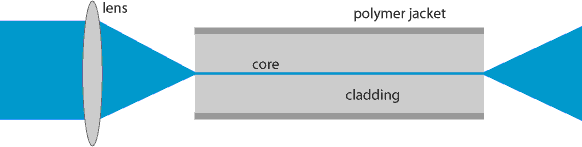


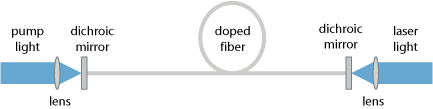
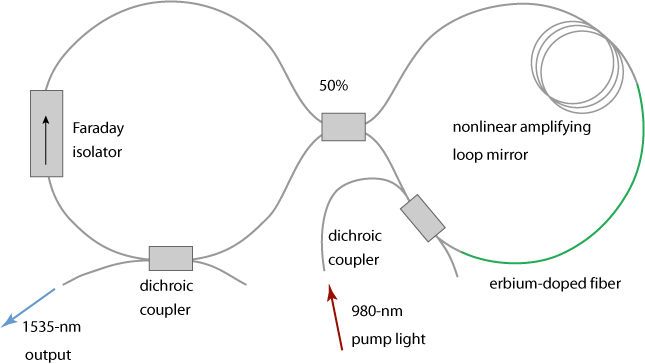
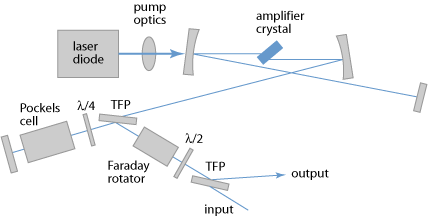
Such computer simulations give you a very detailed insight into the inner workings of devices, including a complete quantitative understanding. That is crucial, for example, for really understanding how these devices work, and for assessing the risk of damage or performance-degrading effects. And that is indispensable for efficient research and development.
See also videos related to some of our case studies, performed with various Power Forms of RP Fiber Power:
- Erbium-doped fiber amplifier for long-wavelength signal
- Erbium-doped fiber amplifier for rectangular pulses
- Yb-doped fiber lasers emitting at 975 nm
- Yb-doped chirped-pulse amplifier system
You can see all of our videos at YouTube.
The physics features offered by RP Fiber Power:
- LP mode solver — highly efficient, works well even with thousands of modes
- power propagation — efficient and reliable even with many pump and signal waves, ASE, etc.
- numerical beam propagation
- dynamic simulations with arbitrary time dependencies of input powers
- ultrashort pulse propagation, again with full flexibility
It is a must-have for anyone seriously dealing with fiber devices — be it in industrial development, scientific research or in education. Its user interface combines utmost flexibility with an easy start. It is therefore equally well suited for efficient routine checks and for most sophisticated simulation work.
RP Fiber Power V8 — a Breakthrough of Usability!
With its crucial new feature of Power Forms, this Version reaches a new level in terms of combining power, flexibility and ease of use. Essentially, these are easy-to-use forms that we provide for a nice set of extensible simulation models, covering a wide range of application areas of the software.
Great Handling
Start your first simulations in no time!

- Just fill out the appropriate form, e.g. the one for ultrafast fiber amplifier systems. Set the relevant parameters and the desired outputs (mostly diagrams). Then run the simulation and inspect the beautiful and highly informative output!
- You can simulate even complex fiber amplifier systems with multiple amplifier stages, each with multiple pump sources, multiple input signals (continuous wave, short pulse, or ultrashort pulse), etc.
- The forms are very nicely designed to be easy to use despite their richness of features. For example, currently irrelevant parts of the forms are hidden, and many output fields display helpful hints when the mouse pointer is over them.
- Comprehensive documentation is available with a single keystroke. You can read exactly what is simulated and how to configure everything.
Amazing Flexibility
Get what you need - even what we did not anticipate!
Form-based user interfaces are common — but often not flexible enough to do real work. For example, what if you need an extra curve on a graph, an entirely new graph, or an advanced simulation with additional inputs?
With RP Fiber Power V8, we have made a breakthrough in how to achieve great flexibility:
- To add an extra curve to a diagram, just add a single line of script code to the form. (We are happy to help you.)
- For an entirely new diagram, enter a few lines of script code into the form.
- For extensive post-processing of the results, including generating output files in a custom format, call an external custom script with a single line of code in the form.
- For even more complex extensions, you can easily create a customized version of a form. This can, for example, have additional input and output fields and perform additional calculations related to them.
- For doing very special things, outside what is covered by all our Power Forms, there is still the option to develop your own Simulation Scripts, which can also be equipped with forms for easy handling.
And our diligent technical support means that you will not be left alone!
Scientific Papers
This software is extensively used for scientific research; a few examples of such papers:
- A. Mauro et al., “Theoretical and experimental comparison of three pumping methods for thulium fiber lasers for low-output power (< 10 W)”, Photonics 12 (4), 328 (2025); doi:10.3390/photonics12040328
- “The mathematical framework briefly described here was simulated by using a custom-developed algorithm in Matlab®, while the separate in-band and out-of-band systems were modeled by using RP Fiber Power®. Notably, RP Fiber Power includes a mode-solver feature for analyzing mode distribution within the fiber and offers a wide range of configurable parameters for both input signals and pump beams.”
- C. J. Shollenbarger et al., “A monolithic linearly polarized counter-pumped 85 µm core rod fiber amplifier architecture for high-energy pulsed applications”, Fiber Lasers XXI: Technology and Systems, 6 (2024); doi:10.1117/12.3001834
- “The simulation software suite is designed for modeling complex multi-stage fiber amplifiers and waveguides. Simulations allow a wide range of variable manipulations, resulting in a flexible and believable modeling tool for accurately predicting the behavior of complex fiber laser architectures.”
- T. W. Hawkins et al., “Kilowatt power scaling of an intrinsically low Brillouin and thermo-optic Yb-doped silica fiber [Invited]”, J. Opt. Soc. Am. B 38 (12), F38 (2021); doi:10.1364/josab.434413
- “The fiber was pumped close to the pump saturation level, corresponding to 50% level of inversion across the entire sample length, as verified by simulations using the RP Fiber Power simulation software.”
- J. P. Kim et al., “High-power extra-large-mode-area Yb-doped fiber laser and amplifier at 978 nm”, Journal of the Korean Physical Society 78 (11), 1062 (2021); doi:10.1007/s40042-021-00192-1
- J. Yin, J. Bao, Y. Tong and K. Yu, “Research on rectangular flat-topped beam based on double-cladding fiber”, 10th International Symposium on Advanced Optical Manufacturing and Testing Technologies: Advanced and Extreme Micro-Nano Manufacturing Technologies, 20 (2021); doi:10.1117/12.2604871
- S. Zhu et al., “Multimode-pumped Raman amplification of a higher order mode in a large mode area fiber”, Opt. Expr. 26 (18), 23295 (2018); doi:10.1364/oe.26.023295
- “For the YDFA, we assume homogeneous broadening and use a conventional rate-equation-based model as implemented in RP Fiber Power to calculate the amplification of each signal mode by considering the local signal intensity and its overlap with the distribution of partly excited Yb-ions.”
- G. He et al., “Research on narrow linewidth picosecond pulsed fiber lasers based on graphene saturable absorber”, Young Scientists Forum 2017, 156 (2018); doi:10.1117/12.2317585
- “RP Fiber Power is used to simulate the ring cavity mode-locked fiber laser system. The influence of the modulation depth of saturable absorber on the output pulses of laser system is systematically analyzed.”
- Y. Feng et al., “Absorption measurement errors in single-mode fibers resulting from re-emission of radiation”, IEEE J. Quantum Electron. 53 (4), 1-11 (2017); doi:10.1109/jqe.2017.2708610
- D. J. Kim, J. W. Kim and W. A. Clarkson, “High-power master-oscillator power-amplifier with optical vortex output”, Applied Physics B 117 (1), 459-464 (2014); doi:10.1007/s00340-014-5855-5
- “The design of the high power amplifier is presented which includes four amplification stages where the parameters at each stage is optimised using RP-Fiber Power software such that the output of the final stage is >500 W.”
- A. Popp et al., “Thin-disk-laser-pumped ytterbium-doped fiber laser with an output power in the kW range”, Proc. SPIE 7721, 772102 (2010); doi:10.1117/12.854321
- “These results are in a very good agreement with our FL simulations done with RP Fiber Power.”
You can find many more papers, e.g. on Google Scholar.
Not a simulation guru yet? Don't worry:
- If you can build a laser or amplifier in reality, you can surely simulate it with this software.
- When in doubt, the high-quality documentation will tell you exactly what is needed, what effects the model takes into account, etc.
- Our diligent technical support won't leave you alone if you encounter problems! We support you even beyond software-specific problems.
Your personal professional development can soon be greatly enhanced: if you become the one who quantitatively understands these devices, you will play a key role in your team.

Start Doing Excellent Development Work
You should now get the right tool to take your design work to a new level of quality, efficiency, and creativity:
- Before ordering parts, testing your prototype, diagnosing and troubleshooting in the lab, simulate your prototype laser or amplifier on your PC. There you can eliminate many problems in no time!
- Only then is it time to order the parts and build and test the device in the lab.
- If you encounter problems later, use the simulations again to quickly diagnose and find solutions.
You can soon save a lot of time and money, and also develop new creative solutions.
Required Computer
You only need an ordinary PC running under a 64-bit version of Windows 10 or 11, for some applications with reasonable CPU speed and memory (e.g. 16, 32 or 64 GB). For using the Power Forms, it is good to have a large screen.
Get more information:
- Learn about the software's features and the used physics model.
- See also our large selection of case studies and the video demos!
- Download the detailed RP Fiber Power PDF brochure (49 pages).
- See also the frequently asked questions.
- See our free tutorial “Passive Fiber Optics”, for which the software has been used extensively, and also the tutorial “Modeling of Fiber Amplifiers and Lasers”, which explains concepts and methods.
If you have any further questions or need a quotation: Contact us